
By Joseph Rimisho · February 9, 2026
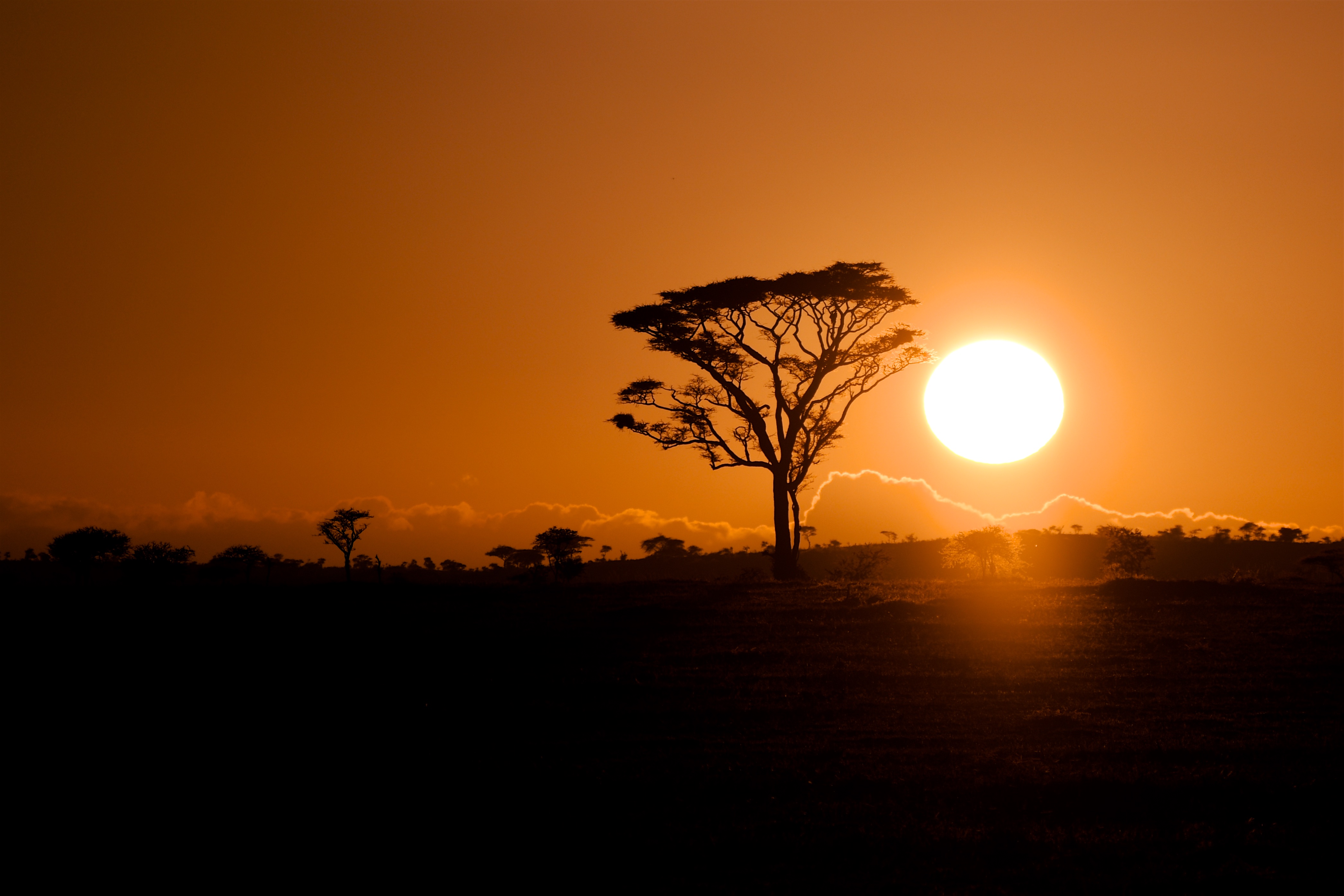
You may arrive expecting lions beside the road, elephants crossing in front of your vehicle, endless golden plains and perfect sunsets every evening.
Sometimes, you get all of that.
Sometimes, Tanzania gives you something completely different.
A quiet morning. A herd appearing from behind the trees. A distant leopard that takes patience to find. A sudden change in weather. Hours of searching followed by one unforgettable encounter.
That unpredictability is part of what makes a safari a safari.
Tanzania is home to some of Africa's most celebrated wildlife destinations, including the Serengeti, Ngorongoro and Tarangire, and the country's official tourism authority highlights wildlife, landscapes, culture and coastlines among its defining travel experiences.
But before your first Tanzania safari, there are a few things you should know that don't always appear in the glossy brochures.
Here are 10 things nobody tells you before your first Tanzania safari.
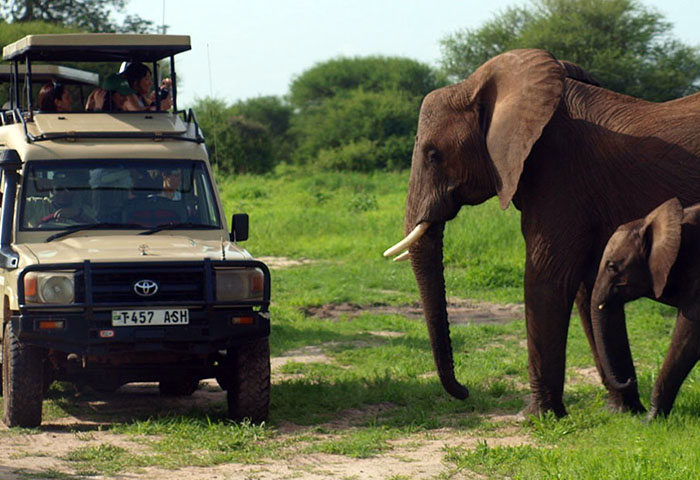
A close wildlife encounter with elephants during a Mwewe Expeditions safari in Tarangire National Park-Tanzania.
This is probably the most important thing to understand.
Your safari itinerary might say:
“Morning game drive. Afternoon game drive.”
It cannot say:
“10:17 AM — lion crosses the road.”
Wild animals don't work according to human schedules.
They move because they're hungry. They rest because they're tired. They disappear into thick vegetation. They follow water. They respond to weather, other animals and the changing seasons.
And that means two safari drives through the same area can feel completely different.
One morning you might find elephants gathered around water.
The next morning, the same area might be quiet.
Then, just when you think nothing is happening, your guide notices movement in the distance.
A few seconds later, everyone in the vehicle is looking in the same direction.
That's the moment you remember.
Don't measure a safari by how many animals you tick off a list.
Measure it by the quality of the moments you experience.
When people choose a safari, they often spend a lot of time comparing accommodation, vehicles and prices.
Those things matter.
But there is another factor that can completely change your experience:
the person sitting behind the wheel.
A good guide isn't simply someone who drives you through a national park.
They understand animal behaviour, landscapes, roads, seasons and the small signs that an inexperienced eye might miss.
A movement in the grass may mean nothing to you.
To an experienced guide, it could mean there's a predator nearby.
A group of birds suddenly taking flight might tell a different story.
Tracks in the dirt can reveal what passed through earlier.
The silence itself can sometimes be interesting.
This is why Tanzania safari planning should consider not only where you go, but who takes you there.
Your guide can help turn:
“We saw some animals.”
into:
“We understood what was happening.”
And that difference stays with you.
Let's talk about expectations.
The Big Five — lion, leopard, elephant, buffalo and rhino — are among the most famous wildlife sightings in Africa. Tanzania's national parks offer opportunities to encounter these iconic species.
But here's the truth:
Nobody can guarantee you the Big Five.
And a safari shouldn't be judged by whether you collected five names.
You could spend part of a morning watching elephants interact with each other.
You could discover a family of giraffes moving across the horizon.
You might watch zebras and wildebeest travelling together.
You could find a tiny bird with colours you didn't even know existed.
You might see a hyena moving through the early morning light.
You might watch a mother elephant protect her young.
Or you might sit quietly as the sun disappears behind the savannah.
Those experiences count too.
In fact, one of the biggest mistakes first-time safari travellers make is looking at nature as a checklist.
Africa is not a zoo.
The fact that you cannot control what appears is precisely what makes the experience special.
This surprises many first-time visitors.
People often imagine safari as constant excitement:
Lions.
Leopards.
Elephants.
Chases.
Photographs.
Action.
But safari also has silence.
Beautiful, enormous silence.
There may be moments when your vehicle stops and nobody speaks.
You hear birds.
Wind moves through the grass.
An elephant slowly walks across the landscape.
The sun rises.
And for a few minutes, there is nothing you need to do.
No email.
No traffic.
No meeting.
No notification.
Just you and the wilderness.
Tanzania's tourism identity is built not only around wildlife but also around extraordinary landscapes and experiences.
Sometimes the memory you take home isn't the most dramatic photograph.
It's the feeling of being completely present.
If you're used to sleeping until 8:00 or 9:00 during a holiday, safari may change your routine.
Wildlife is often active during the cooler parts of the day, so early starts are common.
You may wake before sunrise.
You may drink your coffee while the sky is still dark.
You may leave camp when the landscape is beginning to change from darkness into morning light.
And then something happens.
The sun rises over the plains.
The landscape slowly becomes visible.
Birds begin calling.
Animals become active.
Suddenly, waking up early doesn't feel so difficult.
The early morning can be one of the most rewarding parts of a Tanzania safari—not because someone told you it is “the best time,” but because you experience the wilderness waking up around you.
Look at a Tanzania safari map and the parks can seem easy to connect.
But Tanzania is large.
The experience of travelling between destinations isn't just about the distance on a map. Roads, park entrances, wildlife viewing, terrain and where you stay all affect the pace of a safari.
This is why a good itinerary isn't simply:
“Let's visit as many parks as possible.”
It should ask:
“How much time do you actually want to spend experiencing each place?”
For example, the Northern Safari Circuit brings together famous destinations such as Tarangire, Ngorongoro and Serengeti. Tanzania's tourism authorities specifically identify these destinations as part of the country's signature northern safari experience.
But more destinations don't automatically mean a better safari.
Sometimes fewer places and more time in the right places create a much richer experience.
Don't collect parks. Experience them.
There isn't one single “perfect” month for everyone.
Your ideal time depends on what you want to experience.
Are you interested in the Great Migration?
Do you want lush green landscapes?
Are you hoping for excellent wildlife viewing?
Do you prefer fewer visitors?
Are you combining safari with Zanzibar?
Your priorities matter.
Tanzania's official tourism resources highlight different seasonal experiences, including green-season landscapes and wildlife experiences across destinations such as Serengeti, Ngorongoro and Tarangire.
Tarangire, for example, has distinct rainfall and dry-season patterns, with June to October being its dry season and January to February also falling within a dry period.
So don't simply ask:
“When is the best time for a Tanzania safari?”
Ask:
“When is the best time for the safari I want?”
That's a much better question.
Perhaps you came to Tanzania wanting to see lions.
Then you discover elephants.
Or birds.
Or giraffes.
Or the landscape.
Or photography.
Or the behaviour of animals.
Or the relationship between wildlife and local communities.
Suddenly, your interests change.
That's another beautiful thing about safari.
You arrive thinking you know what you want to see.
Tanzania introduces you to things you didn't know you would love.
Tarangire is a good example. The park is particularly known for elephants and its baobab landscapes, while its habitats also support a remarkable diversity of birds and other wildlife.
You may spend the morning searching for lions and end up talking about birds for the rest of the day.
That's not a failed safari.
That's discovery.
We live in a world where travel experiences are often measured through photographs.
And yes, you will probably take hundreds of them.
Maybe thousands.
But don't let your camera become a wall between you and the experience.
Sometimes you need to put it down.
Look.
Listen.
Watch.
Remember.
There may be a moment when an elephant walks past your vehicle and you simply stare.
There may be a sunset that your phone cannot reproduce.
There may be a distant animal that your camera struggles to capture but your eyes remember perfectly.
Photography is wonderful.
But don't spend the entire safari trying to prove that you were there.
Be there.
The photograph is evidence.
The memory is the experience.
This is the one nobody warns you about.
You think you're booking a holiday.
Then something happens.
You start remembering the roads.
The mornings.
The smell of the air after rain.
The sound of birds.
The landscapes.
The conversations with your guide.
That one elephant.
That unexpected sighting.
That sunset.
And somewhere between the beginning and the end of the journey, Tanzania stops being somewhere you visited.
It becomes somewhere you want to return to.
Maybe next time you'll see the Serengeti during a different season.
Maybe you'll explore Tarangire more slowly.
Maybe you'll add Ngorongoro.
Maybe you'll combine your safari with Zanzibar.
Maybe you'll climb a mountain.
Tanzania offers far more than one safari route. Its official tourism platform highlights wildlife, mountains, culture, beaches and island experiences across the country.
Your first safari doesn't have to be your last.
Expect the unexpected.
Expect early mornings.
Expect dusty roads.
Expect moments of waiting.
Expect incredible landscapes.
Expect wildlife—but don't expect wildlife on command.
Expect your plans to matter, but also expect nature to have the final say.
Expect your guide to become an important part of your journey.
Expect to learn.
Expect to slow down.
And most importantly:
Expect to experience something rather than simply see something.
A Tanzania safari isn't a wildlife checklist.
It's a collection of moments.
Some will be spectacular.
Some will be quiet.
Some will surprise you.
And some may mean nothing until you look back on them months or years later.
That's when you realize:
The safari wasn't only about what you saw.
It was about how you felt while you were there.
Before booking, ask yourself five simple questions:
Wildlife?
Photography?
The Great Migration?
Landscape?
Relaxation?
Culture?
A combination?
Your answer should influence your itinerary.
A shorter safari can still be wonderful, but trying to squeeze too many destinations into a limited number of days can make the journey feel rushed.
Don't choose dates simply because someone says they're “the best.”
Choose dates that make sense for your interests.
Private?
Shared?
Lodge?
Camping?
Comfort-focused?
Adventure-focused?
There isn't one correct answer.
There's only the answer that's right for you.
This question deserves more attention than it usually receives.
Your guide is the person who helps you understand the landscape, find wildlife and make decisions throughout the journey.
Choose carefully.
There is something beautiful about not knowing exactly what will happen.
That's what makes a safari different from many other holidays.
You can plan the route.
You can choose the season.
You can select the parks.
You can prepare your camera.
You can pack your binoculars.
But you cannot schedule the moment when nature decides to surprise you.
And perhaps that's exactly why people fall in love with Tanzania.
You arrive looking for animals.
You leave carrying stories.
Your first Tanzania safari shouldn't simply give you photographs to post.
It should give you memories you keep returning to.
If you're planning your first Tanzania safari, start with the experience you want—not just a list of places you want to visit.
From the elephant-rich landscapes of Tarangire to the vast plains of Serengeti and the remarkable wildlife landscapes around Ngorongoro, Northern Tanzania offers different experiences that can be shaped around your time, interests and travel style.
Your safari should fit you.
And when you're ready, Mwewe Expeditions can help you turn that idea into a journey through Tanzania.
Nature Guaranteed.
Yes. Tanzania offers a wide range of wildlife and landscapes, with established safari destinations including Serengeti, Ngorongoro and Tarangire. The best choice depends on your interests, available time and preferred style of travel.
There is no single ideal length. A short safari can focus on a few nearby destinations, while a longer trip gives you more time to explore different landscapes without rushing. Your available time should shape the itinerary rather than trying to fit every destination into one trip.
A typical day may include an early start, a game drive, meals at your lodge or camp, rest during the warmer part of the day and another game drive later. Exact schedules vary depending on the destination, accommodation and safari style.
No wildlife sighting can honestly be guaranteed. Tanzania provides excellent opportunities to encounter iconic wildlife, but animals move freely and sightings depend on many natural factors.
Useful essentials include comfortable neutral-coloured clothing, sun protection, binoculars, a camera, personal medication, insect repellent and a reusable water bottle. Specific packing needs depend on the season, accommodation and activities.
Absolutely. Tarangire is particularly known for its elephant herds, baobab landscapes and diverse wildlife and birdlife. Its seasonal wildlife patterns can also make it an excellent part of a Northern Tanzania safari.
The Serengeti is famous for its enormous plains, exceptional wildlife and the annual movement of wildebeest and zebra known as the Great Migration.
If you have enough time, combining a Tanzania safari with a beach stay in Zanzibar can create a strong contrast between wildlife adventure and coastal relaxation. Tanzania's official tourism platform specifically highlights both safari and Zanzibar experiences.
Keep your expectations open.
Plan carefully, but leave room for nature to surprise you.
Because the moment you remember most may be the one you never planned for.